Laughter online is rarely spontaneous chaos. It moves along rigorous conduits of repetition, social framing, and compressed semiotics. We track how comedic forms evolve from smoky comedy club basements into viral digital currency.
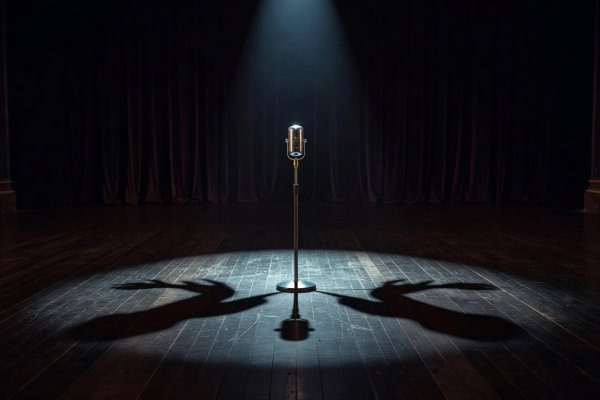
Stage baseline: The physical setup before the punchline replicates.
Introduction
The joke beneath the scroll
Every time an image macro circulates through hundreds of thousands of group chats, or an audience laughs at a three-act premise at the Comedy Cellar in Greenwich Village, a precise linguistic transaction occurs. Comedy demands an unspoken consensus: both speaker and listener must agree on what is standard before either can find amusement in its subversion.
On the internet, this transaction accelerates dramatically. A meme does not merely entertain; it acts as an ideological passport. Understanding why an off-pitch horn or a grainy screenshot of a 1987 music video provokes delight requires stepping past the feed and examining the mechanisms of shared human context.
Analysis Streams
Four ways laughter travels
Discipline 01
Stand-up Architecture
How physical stagecraft, rhythmic pacing, and premise inversion survive the jump from legendary rooms like The Store to sixty-second vertical video clips.
The evolutionary biology of stock photography templates, unedited film stills, and how Antonio Guillem's stock photo became the universal icon of distraction.
In 1982, Scott Fahlman proposed using :-) on Carnegie Mellon message boards to prevent misunderstanding. Forty years later, that simple pragmatic glyph has evolved into multi-layered absurdist humour. The impulse remains unchanged: marking the perimeter of a joke so outsiders recognise that reality has been temporarily suspended.
Internet humour didn't invent irony; it simply created frictionless distribution for it. When Rick Astley released "Never Gonna Give You Up" in 1987, nobody anticipated that its high-energy production would become the web's universal bait-and-switch ritual two decades later.
Verified Milestones
1982
The pragmatic emoticon proposal clarifies tone in text-only bulletin boards.
2007
Rickrolling emerges from early gaming message boards as an innocent prank format.
2017
The "Distracted Boyfriend" stock series proves visual tropes can carry any ideological conflict.
Interpretive Framework
Context changes the laugh
A punchline is never an objective physical constant. Heard in an intimate, low-ceiling comedy room with two drinks on the table, a joke delivers catharsis through collective tension. Encountered on an illuminated phone screen while waiting for the train, the exact same sentence can land flat or feel alienating.
Online culture removes the performer's body while preserving the text. In doing so, it transfers all editorial power to the reader. What makes internet comedy volatile is this decentralised context: you never truly know what room the person on the other end is sitting in.
FAQ Excerpts
Questions worth pausing for
Humour relies on perceived authenticity and minor boundary testing. When a commercial marketing department adopts an organic meme, the joke shifts from a voluntary community signifier to an instrument of sales conversion, instantly breaking the collaborative illusion of play.
Not necessarily. While absurdity and detached irony are common defenses against continuous digital news feeds, internet culture equally produces widespread moments of communal whimsy, sincere homage, and collaborative storytelling.
gigglegroveshowtck.com operates without algorithmic sponsorship or entertainment industry PR affiliations. We view modern comedy not as fleeting distraction, but as modern folklore.